
Obituaries
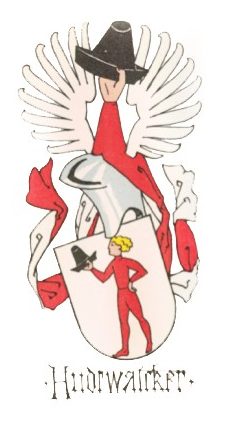
Jürgen Olaf Hudtwalcker 1915 – 1984
Olaf Hudtwalcker passed away in Barcelona on 23 April at the age of 68. A passionate jazz advocate since the 1930s, he was among those who, after the Second World War, helped restore jazz to its rightful place in Germany.
Hudtwalcker possessed an exceptional ability to distinguish genuine artistic quality from passing trends. More than a perceptive critic, he became a benchmark for authenticity within the German jazz community. In 1949, he was one of the three founders of the Deutsche JazzFöderation, which united the leading figures committed to rebuilding Germany’s jazz scene after years in which the music had been suppressed. His reputation as a respected art expert also helped establish jazz as a serious cultural art form.
As President of the Hot Club Frankfurt and later the Deutsche Jazz Föderation, Hudtwalcker inspired numerous initiatives that had an impact far beyond Frankfurt. His jazz broadcasts for Hessischer Rundfunk, which he continued even after relocating to Spain, were widely respected for their high standards and helped keep both jazz and his own legacy firmly in the public consciousness.
With his passing, the jazz world lost one of its most distinguished advocates. Olaf Hudtwalcker will be remembered with deep respect for his integrity, his vision, and his lasting contribution to German jazz.
Dieter Zimmerlé
Jazz Podium, June 1984
A Founding Figure of Frankfurt Jazz
Olaf Hudtwalcker Dies at 68
Olaf Hudtwalcker, one of the leading architects of Frankfurt’s post-war jazz scene, has died at the age of 68. A writer, broadcaster and commentator for countless jazz programmes on Hessischer Rundfunk, he was also among Frankfurt’s first influential post-war art gallery owners. He died unexpectedly of heart failure following a prolonged illness.
Hudtwalcker settled in Frankfurt in the late 1940s, where he established himself as both an art dealer and a jazz writer. Quiet and courteous in manner, yet firm in his convictions, he quickly became an indispensable figure in the city’s cultural life. His distinctive voice also made him a natural presence on the radio.
He had little interest in public disputes. As he once said: “I hang my paintings, and that is how I express my opinion. I want to show works that are complete in themselves—works that need no explanation because they speak for themselves.”
From his modest gallery on Kleine Bockenheimer Straße, he introduced artists such as Marino Marini, Hans Hartung, Fritz Winter, Antonio Puig and Sam Francis to Frankfurt audiences for the first time.
In the world of jazz, Hudtwalcker was among Frankfurt’s most dedicated advocates and promoters. Despite a physical disability that affected his mobility, he worked tirelessly alongside figures including Littmann, Wunderlich, Albert Mangelsdorff, Vogel and Bohländer to foster the city’s jazz culture.
Olaf Hudtwalcker was never a heroic public figure, nor did he seek to become one. Yet he can rightly be regarded as one of the founding fathers of Frankfurt jazz. Those who knew him mourn the loss of a deeply respected friend and cultural pioneer.
W.
Frankfurter Rundschau, 26 April 1984
Olaf Hudtwalcker Dies
When Olaf Hudtwalcker left Frankfurt in 1965 to settle in sunny Barcelona, it was clear that the city on the River Main would not lose touch with him. He continued to write and present his highly regarded jazz programmes for Hessischer Rundfunk, broadcasts that had attracted a loyal audience since 1948.
Hudtwalcker died in Barcelona at the age of 68. On Monday evening, listeners will hear his voice one last time on Jazz-Studio Frankfurt.
Born in Hamburg, Hudtwalcker moved to Frankfurt shortly after the Second World War. He began his career as a merchant before turning to the art trade, running a gallery in the Jazzhaus on Kleine Bockenheimer Straße. Yet his life’s work was devoted to jazz.
In the years immediately after 1945, Frankfurt became home to Germany’s most active jazz club, from which many distinguished musicians emerged. Hudtwalcker later served as President of the Deutsche Jazz Föderation, and his contribution to making jazz better known and more widely appreciated in Germany was widely recognized. He also played a pioneering role in introducing authentic flamenco—its music and dance traditions rooted in Spain’s Romani culture—to concert audiences in Germany.
Frankfurter Neue Presse, 26 April 1984
A Voice for Jazz
Olaf Hudtwalcker Dies
Olaf Hudtwalcker passed away in Barcelona on Easter Monday at the age of 68.
Even during the Nazi era, Hudtwalcker quietly worked to keep the spirit of jazz alive, despite the regime’s suppression of the music. After the Second World War, he became, alongside Horst Lippmann, one of the leading pioneers of Germany’s jazz revival. He served as President of the Hot Club Frankfurt and later of the Deutsche Jazz Föderation.
His greatest influence, however, came through broadcasting. Beginning in 1949, he helped shape the format of modern jazz radio on Hessischer Rundfunk, setting a standard for informed and engaging jazz programming.
Beyond jazz, Hudtwalcker was a respected art collector and gallery owner, and he also played an important role in organizing flamenco festivals, helping introduce this tradition to wider audiences.
Those who knew him remember a warm, gracious and unfailingly composed man whose quiet authority earned universal respect. His rich, resonant voice became inseparable from jazz broadcasting itself. With his passing, German jazz lost one of its most distinguished ambassadors.
U.O.
Frankfurter Rundschau, 28 April 1984
The obituaries have been translated from German. Originally published in 2019.
www.hudtwalcker.com 2026