
Hudtwalckerstraße
Before 1899, the street was called Eppendorfer Straße.
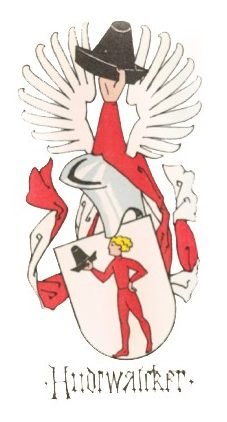
Winterhude (1899): Dr Martin Hieronymus Hudtwalcker (15.9.1787–16.8.1865), Senator; Johann Michael Hudtwalcker (21.9.1747–14.12.1818), Member of the Council of the City. Commended for services to the police administration and legislation in Hamburg. Freemason.
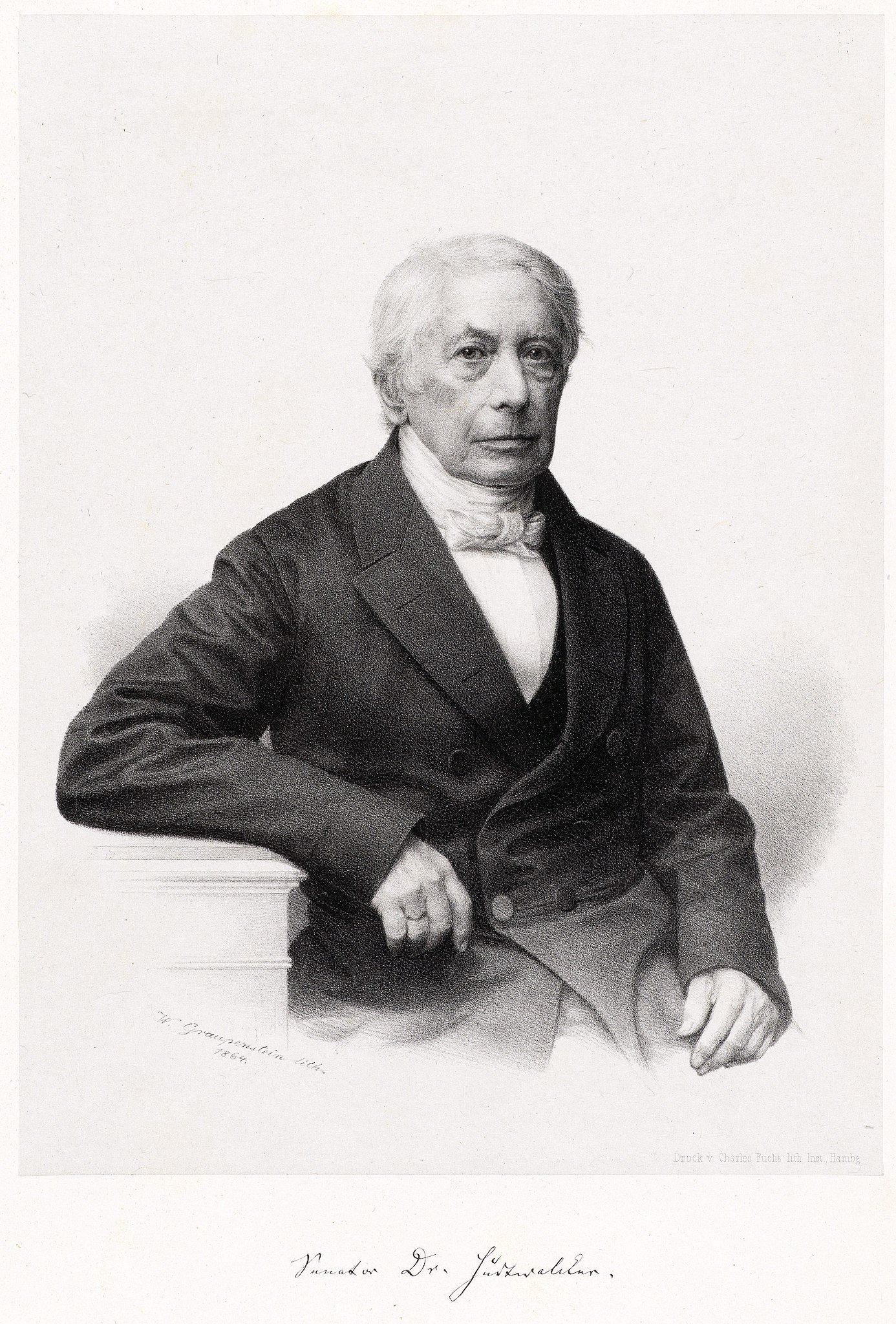
Martin Hieronymus Hudtwalcker was the nephew of Johann Michael Hudtwalcker. His parents were the merchant Nicolaus Hudtwalcker (1757–1832) and Charlotte Amalie Hudtwalcker, née Ohmann (1767–1842).
Martin Hieronymus Hudtwalcker studied law and established himself as an independent lawyer in Hamburg. In 1817, one year after being admitted to the Hamburg bar, he married Charlotte Amalie von Mengershausen (27.12.1796 Göttingen – 15.9.1870 Hamburg), whom he had met in Göttingen, where she was from.
The couple had 12 children, of whom at least three died in early childhood. (Born: 1819, 1820, 1822, 1824, 1825, 1828, 1830, 1832, 1834, 1836, 1838, 1839). Charlotte Hudtwalcker thus gave birth to her first child at the age of 23 and her last child at the age of 43. Throughout all the years when the couple’s children were born at short intervals, Martin Hieronymus Hudtwalcker pursued a political career.
‘Against his will, he was elected as a Hamburg Senator in March 1820; according to Hamburg law, rejecting the election was not possible if one wished to remain a citizen of the city.’ Hudtwalcker remained a Senator in Hamburg for forty years until his retirement in 1860.
Hudtwalcker served as temporary Hamburg Police Magistrate in 1831, and fully from 1833 to 1839. For several years, he headed Hamburg’s highest school authority. In the legislative field, Hudtwalcker was a member of a commission for the preparation of the Hamburg Constitution of 1860; furthermore, he contributed to a reform of criminal law and the code of criminal procedure for Hamburg. Hudtwalcker played a significant part in the Guardianship Regulations that came into force in 1831. He was also active in the field of jurisprudence, serving on the Hamburg High Court, for a time as its President.
Hudtwalcker showed great interest in matters of penal execution and the rehabilitation of juvenile delinquents. In doing so, he placed general prevention before the reformation of the offenders on the one hand, but on the other hand held the position that prisons, like other detrimental environments, could have a harmful influence on the further development of young people. He supported the establishment of a fulling mill and treadmill for beggars and vagrants in 1824. The penal school, which he initiated and which was established in 1833, was intended to protect youths guilty of minor offences from the harmful influence of the general prison system. (…)
Hudtwalcker was a follower of the Revival Movement and one of its influential representatives in Hamburg, as can be read in the Wikipedia entry[1] on Martin Hieronymus Hudtwalcker. Consequently, he also supported the Rauhes Haus and Wichern (Wichernsweg).
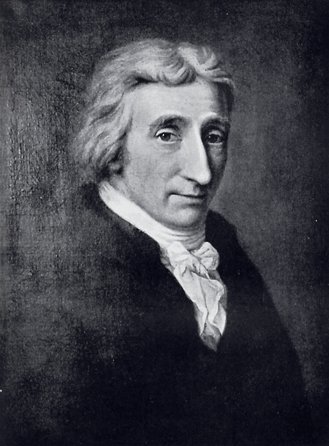
Johann Michael Hudtwalcker was the son of Hinrich Hudtwalcker, a merchant of fish oil,
and Sarah Hudtwalcker, née Ehlers.
‘After his confirmation, Johann Michael entered his father’s counting house (…). In 1774, he became a partner in the father’s commercial business, which now operated under the name “Jacob Heinr. Hudtwalcker & Sohn”.’
On 21 June 1775, he married the Hamburg artist Elisabeth Moller vom Baum, (…) with whom he had nine children. After his father’s death in 1781, he continued to run the trading house. On 18 January 1788, Hudtwalcker was elected to the Hamburg Council and served, among other roles, as the regional administrator (Landherr) for Hamm and Horn. On 30 May 1814, he resigned from his office as councillor due to old age and illness (…).
As a member of the circle of friends that had formed around Georg Heinrich Sieveking, he came into contact with the ideas of the Enlightenment. Hudtwalcker’s strongly socially oriented mindset aimed at an education towards self-help, combined with a exemplary lifestyle of his own. As a member of the Patriotic Society, he was committed to the promotion of public utility, which he viewed as the practical implementation of his ethical and moral goals. Together with his childhood friends Sieveking and Voght [Caspar-Voght-Straße], he belonged to those sections of the Hamburg upper bourgeoisie who ‘spread the ideas of the Enlightenment in Hamburg and Northern Germany,’ as stated in the Wikipedia entry[2] about him.
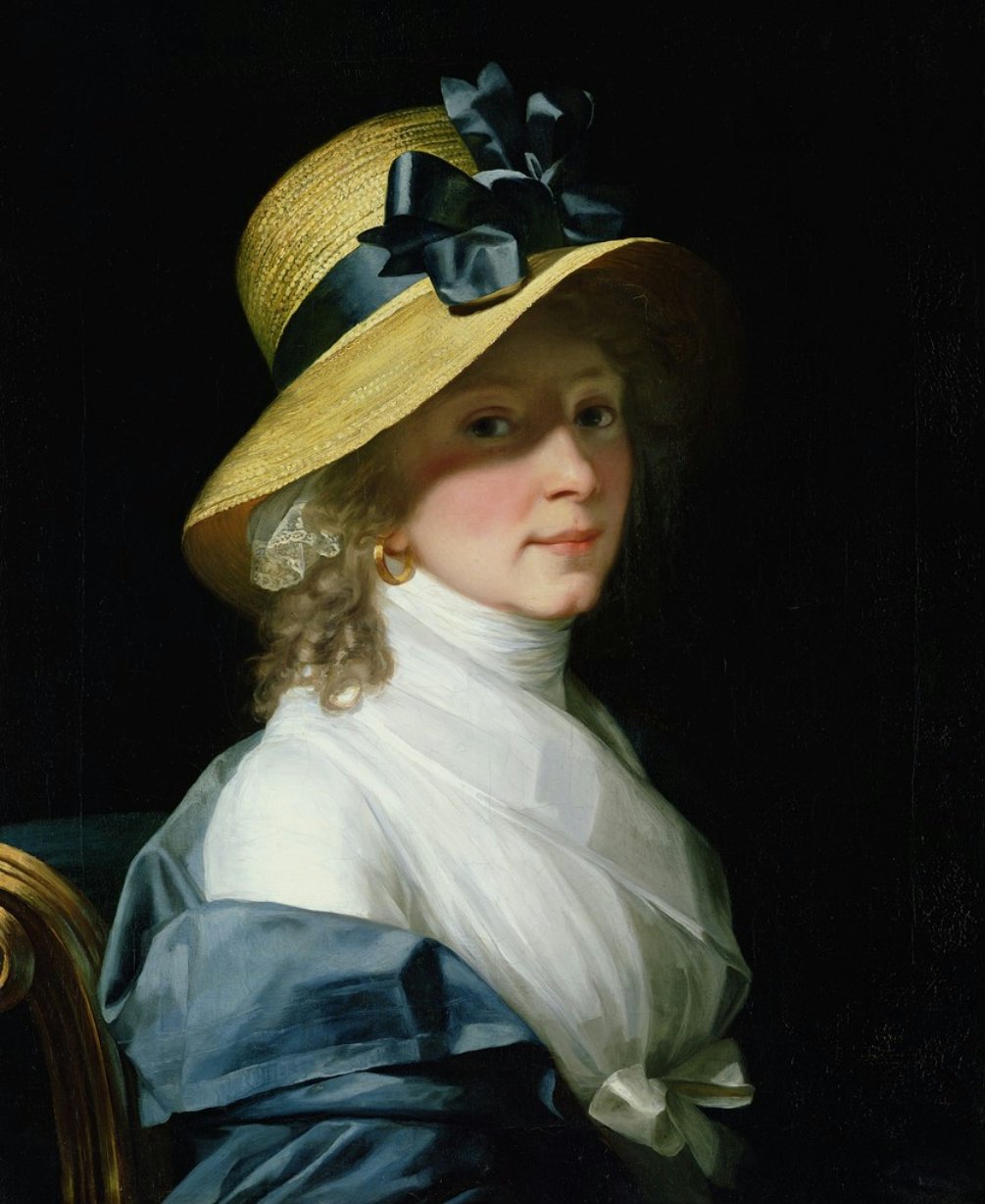
Johann Michael Hudtwalcker’s wife Elisabeth Hudtwalcker, née Moller (6.7.1752 Hamburg – 22.11.1804 Hamburg) was the youngest of the three children of the Hamburg citizen Vincent Moller and his wife Hedwig, née Thuun.
When Elisabeth was two years old, her father died. Elisabeth, who had received music and painting lessons during her childhood and youth, was allowed to continue devoting herself to painting in her leisure hours, as long as she was not yet a mother. She copied paintings in chalk and learned to draw from nature. Her favourite activity was portraiture. When Elisabeth became pregnant in 1776, one year after her wedding to Johann Michael Hudtwalcker, ‘she lost her courage, or rather she received courage for a higher calling. She felt as if inspired by it. She was a mother more than an artist,’ wrote her husband Johann Michael Hudtwalcker[3].
She confirmed this herself. For her, ‘the fulfilment of a mother’s duty held a higher reward than the splendour with which glorious deeds must content themselves,’ Johann Michael continued. The young Mrs Hudtwalcker had a large household to run at Katharinenstraße 83. Nine children were born, though some died in childhood. She approached her duties with great economy and orderliness. Soon, however, she had organised the household to the extent that she no longer had to do everything alone. She had staff for many tasks. Now, the old desire to paint reawakened. Elisabeth seized every opportunity. Yet there was still so much to do that during the course of the day she could often only paint in between times. Consequently, painting with oil colours was out of the question. And so she learned to paint with watercolours.
However, her domestic duties mostly allowed her only to draw. She predominantly portrayed her friends, especially women, as she found female faces more difficult to draw. In 1788, shortly after her husband had been appointed Senator, Elisabeth Hudtwalcker fell ill with inflammatory fever. As a convalescent leave, the couple undertook a journey through Holstein with their eldest children. The couple undertook another journey to comfort themselves over the painful loss of their last child. The journey led through many parts of Germany, where the Hudtwalckers visited friends and met artists from whom Elisabeth received encouragement for her artistic work.
During the journey, Elisabeth fell ill with inflammatory fever for the third time and died after a seven-day illness. Her portrait, painted by Jean Laurent Mosnier, hangs today in the Hamburger Kunsthalle.
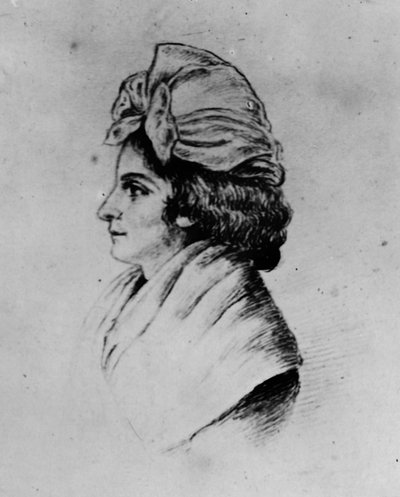
The street is not co-named after Johann Michael Hudtwalcker’s sister Margarethe Elisabeth Milow, née Hudtwalcker (2.10.1748 Hamburg – 20.10.1794 Hamburg), the grandmother of Heinrich Köster (see also: Kösterstraße).
Margarethe Elisabeth Milow is one of the few non-noble women of the 18th century to recount her own life. For a long time, the handwritten manuscript lay dormant in the Hamburg State Archives, until the editors of these memoirs discovered it in 1986[4].
The book became known far beyond the borders of Hamburg. Academic theses and dissertations explored specific themes described by Margarethe Milow in greater depth.
In a typical 18th-century merchant’s house at Katharinenstraße 83, Margarethe E. Hudtwalcker spent her childhood and youth with her nine siblings and her parents, the fish-oil and herring trader Jakob Hinrich Hudtwalcker and his wife Sara Elisabeth, née Ehlers.
Particularly powerful is Margarethe Elisabeth Hudtwalcker’s account of the love between herself and Octav, her father’s counting-house clerk. They could only declare and live their feelings for one another timidly and in secret. For in matters of flirting and romantic endeavors, middle-class women and girls risked a great deal.
For Margarethe, too, her “virtue” and thus her social standing were at stake. Any suspicion of premarital sexuality would have brought shame upon her and her family, making it impossible for her to secure a proper livelihood through a socially appropriate marriage.
And Octav, owing to his father being a bankrupt, was not of suitable social standing.
Margarethe shared a very close relationship with her brother, the future merchant and Senator Johann Michael Hudtwalcker (1747–1818). He and Octav read, for example, Friedrich Gottlieb Klopstock’s (see: Klopstockstraße) epic poem “The Messiah”, which deals with the life of Jesus. In it, friendship and love are celebrated with angelic purity.
Octav and Margarethe wished to follow this ideal. The young people constantly, and not without sorrow, navigated the relationship between religion, love, and sensuality within a society bound by a rigid moral code. Faith played a vital role for Margarethe.
She sought refuge in a divine Father who, however, was also a strict taskmaster. With His help, she wrote, “I became strictly virtuous”.
Yet she could not suppress her love for Octav.
This led to a true tragedy. Betrayed by a seamstress working in the house, her father overheard a rendezvous between Margarethe and Octav:
“As I walk back, I see my father, his stern voice – oh, no voice has been more terrible to my ears, and what he said, those were swords through the very depths of my soul; had I fallen into the hands of a murderer, I should not have been so terrified as I was before my father.”
The swords that Margarethe was made to feel after this discovery were forged from the withdrawal of affection. The fabrics for ball gowns were canceled, her bread was thrown down to her at the table, she was only permitted to fill her plate last, and her father called her a harlot. Octav and Margarethe wrote desperate letters to one another, attempted to part ways, and suffered infinitely:
“I withered like a flower of the field. The love of my parents, my trust was gone; I felt a loathing for it.”
But then a suitable marriage candidate was found: the by no means wealthy, but – as a clergyman – socially appropriate husband, the aspiring pastor Johann Nikolaus Milow. After the wedding in 1769, Margarethe left her parental home under the weight of great sorrow at their parting. After her husband had worked as a pastor in Lüneburg for a few years, he obtained a position as a pastor under Count Schimmelmann (see: Schimmelmannstraße) in Wandsbek.
Margarethe, a mother of eight children after eleven pregnancies and the matron of a boys’ boarding school, which she managed with her husband alongside her work as a housewife and mother, had scarcely any time to visit her parents in the St. Katharinen parish. At the age of 46, she fell ill with breast cancer, underwent an unsuccessful operation, and died on 20 October 1794 at the age of 47.
Three months later, on 10 January 1795, her husband died as well. The tragedy of Margarethe Milow’s life story: just a few years after Margarethe’s marriage, Octav advanced to become a socially acceptable match, having attained both wealth and prestige as a merchant.
Notes
[1] https://de.wikipedia.org/wiki/Martin_Hieronymus_Hudtwalcker
[2] https://de.wikipedia.org/wiki/Johann_Michael_Hudtwalcker
[3] Johann Michael Hudtwalcker: Elisabeth Hudtwalcker, geb. Moller, gestorben den 22. November 1804. Eine
Biographie. Hamburg o.J.
[4] Rita Bake, Birgit Kiupel: Margarethe E. Milow. Ich will aber nicht murren. Hamburg 1987 u. 1993.
Source
https://hamburg-strassennamen.de
www.hudtwalcker.com 2026