
From Senator’s Wife to the Perfect One
Two Worlds, Yet Surprisingly Similar in Some Respects
Elisabeth Hudtwalcker (1752 – 1804)
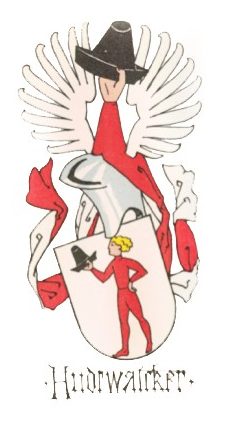
In their portraits, the old Hamburg women look very cool and distinguished, almost reserved. They are the faces of intelligent women who, despite all the kindness that shines from their eyes, seem to us today somewhat unapproachable. So too Elisabeth Hudtwalcker, whom the Hamburger Abendblatt featured in a portrait when it first spoke to its readers of the idea of the perfect Hamburg woman. The road from the senator’s wife of that time to Inga Carlsson, the newly elected perfect Hamburg woman, is a long one. Yet the two women have quite a few things in common.
Elisabeth Hudtwalcker was painted by Lemontier in 1803, one year before her early death. The portrait, one of the finest testimonies to Hamburg’s history held in the collection of our Kunsthalle, shows a beautiful young woman who appears to have matured beyond her years. She is dressed in costly finery, as though the tailor had enclosed her within a shrine.
Her life companion, Senator Johann Michael Hudtwalcker, was one of the great names in the long succession of distinguished senators and ministers of our city-state. In a report by Percy E. Schramm on “The Women of Hamburg in the Age of Sensibility”, much is said in praise of the high standard of cultivated living in the Hudtwalcker household. Johann Michael Hudtwalcker was a true representative of the merchant city, a man of great economic foresight. At the same time, he was highly educated, and after the death of his prematurely departed companion, he felt compelled to erect a moving literary memorial to her with the power of his pen.
Elisabeth Hudtwalcker, for her part, was a testament to the high standard of women’s education in her time, the age of Goethe. She read Winckelmann and knew all the works of Gotthold Ephraim Lessing. Both husband and wife cultivated, with deep understanding, friendships and acquaintances with Chodowiecki, Schadow, Graff, Geer, Oeser and Tischbein. The Senator wrote poetry; the Senator’s wife painted. Their love story was not without its romantic elements, nor was their fate without tragic touches. The bridegroom courted his bride with a deeply felt, fictitious letter that he published in the newspaper. Both felt a passionate attachment to the theatre. Elisabeth Hudtwalcker, as Percy Schramm reports, recited entire scenes from Emilia Galotti. In raising her children, she allowed herself to be guided by Rousseau, unaware, of course, that Jean-Jacques himself was a deeply negligent father and hardly a model of a respectable “husband”.
All these women of the Elisabeth Hudtwalcker type lived “above the lowlands of the people”. They were exemplary guardians of the home and in Hamburg hardly maintained what Paris, Vienna and Berlin called a “salon”, even though their hospitality was every bit as cultivated as the furnishings of their substantial bourgeois homes—certainly far more cultivated than one might expect of “rich shopkeepers”.
Belonging to an old and respected patrician family did not by any means always signify wealth. This is demonstrated by the touching story of the wife of Carl Friedrich Petersen, the future First Mayor, who was deeply alarmed when her husband was elected to the Senate. The honorary office required considerable expenditure but brought no income, and she therefore seriously feared that she would now have to cut back on the use of butter.
In old Hamburg, then, people were quite prepared to make do with a little less in order to preserve their rank and standing—to live simply for a year so that, at least once, they could entertain their guests lavishly and give the impression of prosperity.
The names of Elisabeth Hudtwalcker, Elise Averdieck, Amalie Sieveking and Emilie Wüstenfeld have come down to our own day; they are names held in honour. A patriciate in their sense of the word no longer exists. Today, the women who represent our city emerge from the people themselves. As housewives and mothers, but also as women pursuing professions of their own, they strive to find their way through life with competence, diligence, integrity, intelligence and experience—and to stand on their own, even without a man at their side.
Inga Carlsson, the only female Quartiersmann in Hamburg, is a good example of these women. It speaks to the Hamburgers’ closeness to everyday life and to the harbour that they nominated a young, unpretentious woman like her as the “perfect Hamburg woman”.
Inga did not hesitate to continue the life’s work of her father, who had practised the respectable and important trade of a Quartiersmann in the Port of Hamburg, although no woman before her had ever taken up this traditionally male profession. For Inga Carlsson, the work of a Quartiersmann is no dry commercial occupation. The cargo entrusted to her is not, to her, merely a heap of lifeless objects. Inga Carlsson has enough imagination to see, whenever she handles goods from foreign lands, the people who have entrusted her with their precious merchandise. And why, in 1951, should she not feel the same affection for a Hemingway that her female predecessors of 150 years earlier felt for Klopstock, Hagedorn and Herder?
To be sure, they belong to two different worlds, Hudtwalcker and Carlsson, separated by generations—and yet, in how many respects they remain surprisingly alike!
Erich Lüth
Hamburger Abendblatt, Monday, 23 July 1951
Translated from the original German text published on this website in 2017.
www.hudtwalcker.com 2026