
A Biography
Elisabeth Hudtwalcker, geb. Moller, gestorben den 22. November 1804
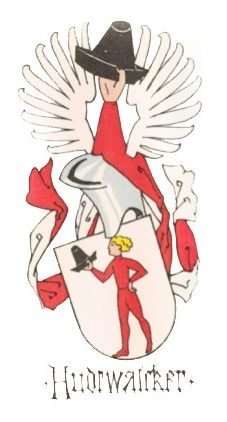
By her husband Johann Michael Hudtwalcker, born in Hamburg on 21 September 1747, died there on 14 December 1818
Merchant in Hamburg; Senator of the Free and Hanseatic City of Hamburg from 1788 to 1814.
Married there on 21 June 1775 to Elisabeth Moller.
What, in the wide realm of Creation,
withstands destruction;
what, in the course of time, expands into the immeasurable—
that is the eternal soul of knowledge, the essence of the arts,
even when the thinker has fallen asleep, even when
the artist has departed.
If I could portray, for the few readers to whom this biography is dedicated, the image of the woman who is its subject even half as vividly as it now lives in my soul, and as it will always live there, it would require a much longer time. Yet even if I could, it would still remain a need of my heart. After the first shock of grief at a great loss, it is so natural to speak of what one has lost, and the tearful eye finds relief in looking upon it once more.
The description would be unworthy of its subject if it were not rigorously truthful; and it would still be true if it were as simple as truth and gentle lament alike require. Let no one reproach me if my first purpose is, through the sympathy with my grief which I seek to awaken in others, to comfort myself—and if that alone should suffice to preserve the memory of my beloved somewhat longer than until the tolling of the funeral bell has faded away.
Elisabeth Moller was born on 6 July 175[?] and was the youngest of three children. Her father died shortly after her birth, in his thirty-first year, of consumption, and her mother, an excellent woman and, for her age, a highly educated one, undertook the upbringing of her two daughters and her son.
She preferred to endure many a privation rather than economize on the instruction she gave her children in the living languages and in music. Betchen—forgive me, as I shall ask forgiveness for many other things, that I call her by this name—had received from Heaven that gift which we poor mortals cannot bestow upon one another, a gift recognized in every age and among every nation, and which is at once the riddle and the solution of every system of education. Enough—Betchen learned passages from Racine and Boileau by heart, though it was thought she was merely learning to read French; she learned Latin because she was present in the room during her brother’s lessons, knitting as she listened; she drew because her brother, too, had a drawing teacher, and she copied the figures from the blue-tiled stove, which was known to provide fine and beautiful models. The child ripened into a girl, and when I came to know her, she was cultivated in every respect. Perhaps she was beautiful only to me, but she was adorned with that grace which the ancients, despairing of representing it in any other way, could portray only under the image of a goddess—and which, ah, how many of my friends, men and women alike, can testify, did not leave her even in death.
I went travelling, and her image accompanied me. When I returned, I found her more deeply involved in what is called the great world; she danced with consummate perfection the dance now almost entirely displaced, although among all dances it is perhaps the most truly pantomimic drama—the minuet—and she spoke French and English with great fluency. She was acquainted with my sisters; she became acquainted with me as well. But I wished to draw nearer to her, and to show her that there was someone who already knew her more intimately than many others did. For this purpose I chose the curious device of having a letter, written as though from her own soul, inserted in the Address-Comptoir Nachrichten. She recognized herself in the portrait, but did not know the hand that had drawn it.[1] Yet she could not be disguised, and my friends guessed who I was without betraying me. By then she had already made great progress in art.
Sturz, whom she came to know on his return journey with the King of Denmark, had, as a friend of the family, given her instruction in pastel painting, while the painter Matthes had taught her oil painting, though for only a few months. Her circumstances with her mother, however, made it necessary for her to restrict herself to miniature painting. With great strain upon her eyes she copied English engravings onto parchment in miniature, examples of which I still possess as precious memorials of her art; and her Lucretia on ivory, from this period, is still admired by connoisseurs.
Indeed, she had already ventured as far as portraiture, and had painted in miniature the likenesses of her aunts, uncles, and nieces who were willing to sit for her. Her hand was still somewhat tentative, yet she captured their likenesses with remarkable success.
To this period belongs the sad history of the toothache she suffered for years, naturally aggravated by the strain upon the nerves of her head and eyes. It cast a shadow over her girlhood and gave her not a sickly, but an exceedingly delicate, appearance.
Such was the girl when I wrote to her and offered myself to her. The letter, which portrays me rather than her, does not belong here.
Had she written my biography, she would have included it. It was written with all the fire of first love, yet at the threshold of manhood, in my twenty-eighth year; it was understood and felt, and the girl’s heart became mine. My father, who went on to become one of her closest friends, as he had been one of mine, my fortunate self’s, since boyhood, was deeply moved that my beloved should be Elisabeth Moller, bearing the same name as his first love, a sister of Klopstock’s Meta; and he had no objection to the match other than the … fragility of the girl.
Her mother, who had come to know me and had lost her husband so early, saw in my frail appearance a sign that I might meet a similar fate, and she had precisely the same concern, which was likewise the only obstacle to her consent.
Now the poor lovers were at a loss, but love is inventive and bold. Fortunately, we had both, from our youth onwards, the same physician, a man who had snatched me from death more than once, who had been among the first in Hamburg to inoculate her against smallpox, and who had acquired an exact knowledge of her constitution.[2] We both appealed to his judgment; it proved highly favourable, and the bond we had formed was sanctioned by our parents with tears of joy.
Joy makes one healthy, and we were now in possession of the greatest happiness on earth.
We did not, as is beginning to become customary, strive very hard to shorten the time until our marriage; we had learned from the nightingale that the loveliest songs cease when the nest has been built. Thoughtfully and slowly we gathered the straws for ours, and nearly four months passed in this way. Betchen painted my portrait in miniature, but of all her works it turned out the least successful. If Love was the first painter, it was so only in the manner taught by that beautiful myth: by the light tracing of a shadow’s outline upon the sand. Where is the beloved woman who can paint the man she loves, and where is the beloved man who can sit for her? Those happy days fell in spring, and now her feeling for beauty poured itself out upon me. I gave a ball for our friends, men and women alike, where Betchen danced “her last maiden dance,” and my friend Ebeling glorified it in a poem, although:
Enfolded by your lovely arm,
And neither kissed nor loved, he sang.
From it I shall quote only this beautiful prophecy:
Many a joy,
Worthy of their hearts, descends
From the Giver of all good; come, come again,
To bless them often.
On my father’s wedding day we entered into our own union, and our friend Sieveking, who had gone before us—alas, before her as well—let our Epos take flight that day:
And then let not death divide the two
Whom Thou hast made for one another!
Let them embrace when, to higher joys,
Thou, All-Bountiful, callest them together.
He will already have explained to her why this prayer was not granted; I must await the answer with resignation.
Now we had left father and mother behind, and the pen falls from my hand. Farewell, for how can words express what every language is too poor to contain? If the mingling of souls were but a whim, then here and there we would have been deprived of our most exalted joys. Enough: let me return to the artist.
What could I, now that she was wholly mine and not yet a mother, have more earnestly desired than to increase her knowledge of art and satisfy her inclination towards it? With what eagerness she immersed herself in all that I had collected on my travels relating to art, and instead of the privations of her former circumstances she now found herself, in this respect, in a kind of abundance. Since my counting-house was in my father’s house, she was alone for many hours of the day, which she devoted to the cultivation of her art; and when we were together, we read Winckelmann, Lessing, Sulzer, and Mengs. P….., who was at that time here and had long been a member of our household and (?) official, Kuntz, now in Naples, and Rachette (?), who lived in Petersburg, often visited us, and a prospect of art opened before the artist which, with her little miniature brush in hand, she could scarcely have imagined. I sought to take that brush from her and put chalk in its place, and she followed me willingly. The first volumes of Lavater’s Physiognomy appeared at this time and brought her hours of bliss. They contained several plates with tiny heads, which she copied in red chalk at natural size; even enlarged in this way, they retained their physiognomic likeness, and were evidence of her growing advancement. At this time I had a collection of paintings assembled in Italy by an Englishman to study, and had been charged, since they could not be sent on because of the season, with not leaving them in their crates over the winter. They were hung in our room every day, and the artist revelled in these delights.
She now began to copy some of these works in pastel, a manner in which she had by then made considerable progress, particularly through assiduously copying works by the Lübeck Stein. But she went further and turned to oil painting. She did not yet venture upon portraits in oils, but she copied the portrait of one of her friends after Juel, and another after Graff; both were welcome gifts from her hand. What she perfected above all these things, however, was drawing from nature, which she now began and continued until her death.
Her sketchbook was always in her workbag, and since she was reluctant to ask anyone to sit for her, she liked to seize the moment at gatherings or on country excursions when people had settled down to play or rest, and then draw their faces, hands, or poses, although she rubbed out most of these studies again, since they so rarely satisfied her. Portraits were her favourite work, and even during the first half of her pregnancy she painted my father in miniature for a snuffbox intended for my mother, and drew my parents and all my sisters and brothers on a large scale on blue paper, in black and white chalk—a manner halfway between pastel painting and drawing which greatly pleased her. This collection was sent to my brother in Livorno.
But now her courage failed her—or rather, she found courage for a higher calling; she felt herself inspired by it. “As a mother she was more than an artist; she gave up the reward that one might cast for her in bronze for the smile of a child.”[3]
She now began to study Rousseau and Basedow, and would not give birth to a child without first having reflected upon its education. At the same time she occupied herself with the needs of the little newcomer she was expecting, and sewed with her own hands everything the child would require. She had acquired great skill in this, and possessed, in general, a remarkable dexterity in all mechanical work; her accurate and keen sense of proportion served her admirably, while in matters of dress and adornment her cultivated taste was of excellent assistance.
The dreaded moment came, and after a difficult confinement, during which her courage never left her, her firstborn was a dear, healthy little girl.
The intoxicated joy in which she saw me increased her own, and now the bond between us was drawn still tighter.
According to the physician’s testimony, she was so well that she was able to fulfil the sweet and sacred duty of giving her child the breast herself, although I had by then become convinced that it would have been more beneficial to both mother and child had she refrained from doing so.
What a new source of joy now flowed towards her, as she was able to satisfy the strongest passion of every good woman—maternal love—and with what joyful pride she could look upon the child lying at her breast. She had so often and so gladly drawn Madonnas; now she had herself become one to me. The little girl was healthy, and she gave me another child, who, just as she had begun to know us and smile at us, was taken from us in her eleventh month while teething. This death struck her terribly, and her mother’s heart was torn apart. In that same year she also lost her dear mother, and her daughter’s heart was torn as well. She wept and bore these sufferings with quiet resignation, but a pause in her art was the natural consequence of these misfortunes and of the necessity of moving house twice. Her spirit did not succumb, and her delicate body remained healthy; in the years that followed she gave birth to three sons.
We resolved upon inoculation against smallpox when we had a daughter and a son, and I now come to the saddest period of her life.
Our daughter suffered so severely from the illness she had been given that she lay blind for three weeks, close to death, and her eyes and constitution were weakened. Ah, if only I could portray the mother as she was during this time, setting aside her own health in order to be everything to her child, and to wish to be everything—and how, at last, the child owed her recovery to her devoted care. Yet she showed herself thus not only in this illness; in the many illnesses that followed among the other children, she was no different. She knew it, and often declared that the fulfilment of a mother’s duty has a higher reward than the splendour with which glorious deeds must content themselves.
My father passed into the other world, and was worthy of the hot tears she shed for him. There existed between their two souls, despite the difference in age and upbringing, a sympathy that can be founded only upon a likeness of spirits.
I had now bought and moved into a large house, and our small household had grown into an extensive establishment whose management, together with the upbringing and care of five children, fell to her, while I too was burdened with business and had reached that age at which our state rightly demands of its citizens duties whose fulfilment it counts an honour. She undertook hers with that modest apprehension which has always accompanied self-knowledge in all our endeavours, and which by that very quality assures their success.
She could not easily accustom herself to the unfamiliar larger expenses, and her inclination towards economy found so little satisfaction. This inclination, which belongs almost universally to the finest women of her sex and is a consequence of their exclusion from the ordinary means of earning a livelihood, is anything but a disposition towards avarice. It is that elevated spirit of order which the ancient nations already held sacred in their wives and matrons; and although the fulfilment of the duties of a good housewife is neither so sweet nor so rewarding as those of wife and mother, it is nevertheless sanctified by its union with them; indeed, in itself it is as natural as it is beautiful. Why should a woman not gladly attend to the arranging of the table, which is laid for her children and her friends, or gladly care for the clothing and linen of her children, thereby giving them pleasure? She had soon established an organization which required little more than her oversight, and she could once again devote herself to her art, though with interruptions that are painful to an artistic spirit. Much of all that she did and was she owed to the early habit she had formed of making use of the morning hours.
Chodowiecki, who was then here, often visited us. Praise from artists such as these spurred her on, and she learned much from them. He procured for us a collection of all his works, from which he subsequently added each year’s harvest of the preceding year; this, being quite complete, became both her study and her recreation. We rented, at first chiefly for the little children, a small garden by the Deichtor, and here, amid the broad open prospect it afforded, her inclination towards landscape painting awakened.
We found the place so beautiful that we could expand our little domain there, and she now turned, together with Ahrens, who took great pleasure in teaching this pupil, to the art of beautiful gardening. There is not a tree standing on that spot which she did not plant according to his advice. Here she spent happy summers with her little band of healthy, cheerful children. With the assistance of the worthy Morge (?), she had now herself become her children’s teacher in drawing, and in return they had to serve her as living models. Her three sturdy boys were her academy, and how often was I witness to the beautiful sight of the children gathered around the table, drawing from a plaster head, while she meanwhile represented the group itself, or the living heads before her. She always preferred the human figure, yet how many a cow or goat did she also seek to draw! She preferred the old tree and the beautiful growth of trees, but the flowers of her garden did not escape her either. At first she painted them in watercolours according to the instruction of Madame Mathes, partly in pastel and partly merely in pencil. Nor did she confine herself to flowers alone; with her feeling for the beautiful variety of tree leaves, she sought to represent these as well. As the number of our children increased, with three more daughters and a son added to them, it was natural to wish to provide her with some relief in their care. At her suggestion, since she was so firmly convinced of the influence of beauty upon children, I commissioned Chodowiecki to find a companion for them, and his choice was most fortunate. Through him we obtained Charlotte Calve, whose name I am so glad to mention here with gratitude, since during the five years she spent in our household she was not merely my wife’s companion, but her friend. She took delight in her youth and beauty and often drew her in very different manners.
My appointment as councillor, although it was as unexpected to her as it was to me, made no impression upon her, and she laughed heartily that I should have been so moved by it. She was too proud of her inner worth to care greatly for titles and the like, and this change in my circumstances made not the slightest difference in hers, nor in the way she lived or conducted herself, although she was otherwise deeply touched by the respect my fellow citizens had shown me and continued to show me. Soon afterwards she was seized by a severe inflammatory fever, during which her life was in great danger. She survived it happily, suffered the same illness again eight years later, and was now, for the third time, to meet her death from it. With profound delight she felt the joy of recovery, and all her cheerful activity returned so quickly that the following summer we travelled through Holstein with the older children. It was the first journey of any consequence she had made beyond her native city, and her delight was all the greater, her enjoyment purer and more intimate, than that granted to many on the so-called Grand Tour. She knew how to appreciate the beauties of this lovely little land, which brought back to me the images of my youth in Yorkshire; she looked upon its magnificent lakes with gentle emotion, and upon the Baltic Sea with something more exalted. For years afterwards she could describe to us places and sketch scenes that had almost faded from our own memories. Her art acted so beneficially upon her feeling for nature that one was often tempted to believe she regarded art merely as a vehicle by which to reach a higher enjoyment of nature itself.
Our two youngest daughters were taken from us by death, one eight weeks after her birth, whose loss she bore with great fortitude, the other, once again while teething, in her eleventh month. With bitter grief she parted from this child, whom she even drew while it lay in its coffin. Before the coffin was to be closed, she called me to her alone and held a penknife in her trembling hand. She had always been terribly afraid of being buried alive. “Would I not permit her, for her reassurance, to make an incision at the child’s throat?” Even now I see her carrying it out, with all the anguish of a mother and with tears pouring forth. You who laugh at such small details, and at similar ones without which there can be no true biography—for you this was not written; it has merely fallen into your hands.
I was now able to make arrangements to fulfil a long-cherished wish: to show her more works of art than she could see in Hamburg. Together with our two eldest children we therefore travelled through Berlin to Leipzig, Dresden, and Freiberg, returning by way of Brunswick and Wolfenbüttel. I did not present myself to any of my business acquaintances, since we had to make very economical use of the six weeks I could spare from my duties, and I count this among the happiest periods of my life, because during it I made her so happy and cheerful. Her health, it is true, was already greatly weakened; she never suffered from physical exertion during the journey, but looking at paintings for too long very often brought on a faint.
In Berlin we saw our friend Calve again, and one of our first visits was to Chodowiecki. With what gracious hospitality did the man receive us! He immediately handed her all his portfolios, and she searched through all these treasures with visible delight. How much she had to ask, and how much she learned in only a few days! She insisted that he should not allow his work to be interrupted, and sat for hours behind his chair. Through him she was led to take up drawing once more with the silverpoint, though she did not remain long faithful to that small and painstaking manner.
She made the acquaintance of the sculptor Schadow, and very soon won the confidence of all the artists whom she met on this journey. One soon found her initiated into the secrets of art, which is a greater recommendation than all the learned phrases about it; and her unassuming modesty, her Socratic manner of asking questions, made even the reserved become open with her. Schadow showed her his finished and unfinished works, and his pupils worked in her presence. His monument to the young Count von der Mark in the Neustadt Church moved her most deeply.
She saw all the collections of paintings, and it is not these but she whom I must describe. She left me a diary written entirely in pencil, and from it I shall transcribe one passage literally: “Wörlitz was a glorious refreshment to me, for I had grown weary and ill from looking at the palaces of Berlin. What is art compared with nature? The former, after so much laborious work, immediately begins to move towards ruin; the latter, requiring only a little care, grows more magnificent from day to day, affords greater and more cheerful enjoyment for health and happiness, and brings us nearer to our Creator.”
In Dresden she soon felt at home, and almost every morning during our stay there she spent in the Picture Gallery, whose treasures were, after all, almost the very purpose of our journey. She often confessed that here she had found works of art which surpassed her ideal of them. She always returned greatly exhausted from the immense effort with which she wished to see everything, and once fell into a long and severe fainting spell, to which she was in fact often subject during this period of her life. She had come to describe these spells as a most agreeable intermediate state between waking and sleep, and her features at such times were altogether like those they would later bear in death.
She became well acquainted with Grosz, Seidelmann, Zingg, and Costmann (Casanone?), of whom she says in her diary: “He was so encouraging towards my little bit of art”; he gave her the courage which, from this time onward, she also began increasingly to show. But she became most closely attached to Zingg, who accompanied us on all our excursions into the beautiful countryside around Dresden. He witnessed her delight, for until then she had never seen scenery so enchantingly mountainous, and his profound feeling for nature, which he expressed in his drawings, was entirely akin to her own.
In Freiberg she saw [the town], and the hospitable and friendly reception given by Herr von Feynitz and his family, of whom she seemed at once to become a member, remained forever in her grateful memory. To find good people was her greatest joy, and once she had found them, she held fast to them.
In Leipzig she visited the collection of paintings, particularly the Richter collection, and became acquainted with Geyser, Bausz, and Oeser. The last, especially, received her as though she were his daughter, parted from her in tears, and wished to have her as his pupil for a few months. Of Bausz she writes in her diary: “He is not merely a great artist, he is also a loving father”; and of Oeser: “He is the kindest old man one could imagine.”
At Salzdahlum she still saw the gallery with great delight, and now her longing for her young children became very great, so that we hastened our return journey. She was almost intoxicated with the joy of seeing them again, and closes her diary with the words: “May it be a foretaste of the reunion, in that other world, with those who have gone before and those who will follow.”
During our stay in Berlin we came upon the gravestone of the painter Cherbusch in a churchyard. Its inscription, most probably by Ramler, moved us deeply. Since I do not know whether or where it has been printed, and since I find that she copied it into her diary in ink, I shall place it here without further addition:
Anna Dorothee Cherbusch, née Lisiemsky
born 1722, died 1782
Whoever you may be,
Mark well this monument
Of a woman
Who surpassed many men.
Few men surpassed her
In the art
Of depicting
The visible expression
Of humanity
With understanding.
No man surpassed her
In manly striving
To reveal within herself
The invisible image
Of Jehovah.
Whose final breath
Was a blessed feeling
Of immortality.
Hail to you,
If you attain this goal.
She had needed the rest and renewal which this journey had given her, for after our return we were beset by a severe measles illness among all the children and by domestic troubles of many kinds. Art was not forgotten, but pushed aside. I had to undertake the administration of the Praetorate, and the separations between us, which until then had been rare, became more frequent. In the year when I was not permitted to be outside the city at night, she would accompany me in the evenings, with the children, as far as the city gate. There was no curfew at that time. Ah! At the great gate that now separates us, there is none either! But there is also a great eternal opening at morning!
A visit from Lavater, to whom she had sent pictures ten years earlier and who had written to her, was very welcome to her. He spent a morning with her. Apart from his Physiognomy, which she possessed, she had read little of his work; she spoke with him about art while showing him her drawings, and found him more knowledgeable in such matters than she had expected. Quiet years followed once more, and she was now able, with fewer interruptions, to surrender herself to her inclination towards art, the further history of which I shall now set down here. She had by then advanced very far, and the difference between the works of the last decade of her life and those of her earlier years is striking.
She drew six children on a single sheet, which, in the correctness of the drawing, the arrangement, the likenesses, and the beauty, is one of her most accomplished works. She copied beautiful oil paintings in sepia and now began once more to paint in oils. She painted portraits of her children and began various other works which she left unfinished. She had made herself a ….; I ordered one for her from Paris by way of Rouen. She insisted that it be insured, and she was quite right, for it was indeed lost in an accident, and I was then able to have a second one sent to her, which gave her great pleasure.
Her greatest success came with her copies of oil paintings. I had the opportunity to purchase a Belisarius by ….., perhaps also one which—however the matter may have stood—was after Battoni, and she copied it, as she did many other works, with such fidelity that they were almost deceptive. Monier came here; he painted her portrait, and she owed much instruction to this great artist, whom she greatly esteemed and whose worthy wife she came to love dearly. He was pleased to have her sit behind his chair while he worked, took great pleasure in the … of her own work, and was happy to converse with her when he visited us in the evenings.

Yet she soon began to realize that her circumstances and higher duties did not permit her to follow her inclination. The life of a woman in Hamburg, who is a mother and mistress of a household, and who neither can nor may withdraw from the society in which it is also her calling to live, contrasts too greatly with the true life of an artist. Interruptions of many kinds—just when the palette had been prepared and the brushes freshly washed—made her task more difficult. Women devoted to music and poetry are less dependent upon such arrangements, and are therefore happier in this respect. All this led her not to cast aside the easel, but to set it aside with resignation until quieter times—times, however, that were never granted to her.
She had nevertheless brought matters so far that she would have her children stand before her and painted them freely in oil upon the leaves of a folding screen, in poses very like their own. A French artist, Beaudiot, who drew portraits in black chalk—almost more drawing them than painting them—was the reason she adopted this manner, not because she considered it the finest, but because she found it the one best suited to her circumstances. In this way she continued, until as late as fourteen days before her death, to make portraits of her friends, both women and men; portraits which, even when their likeness can no longer be judged, will remain beautiful memorials of her art. She preferred young girls and women for these studies, because she considered the female face, and the younger face above all, the more difficult to render, and every difficulty held an additional attraction for her. Director Tischbein returned from Naples to Hamburg and completed the circle of great artists whose personal acquaintance she had made and from whom she had learned. He was always glad to be with us; she delighted in watching him draw, and only a few days before her final illness he made, in her presence, sketches which I later found carefully preserved.
Enough of the art and the artist—but not yet enough of her!
She lived a human life, and though it was rich in joys, much sorrow was allotted to her as well. The most gnawing sorrow, and the one that most deeply shook her health, was the long and severe illness of the eyes of our eldest daughter, who, in this as in everything else, had already become a worthy pupil of her mother, in art as well. There are souls for whom compassion causes a deeper pain than their own suffering, and she belonged to these noble ones. The anguish at the first discovery of the weakness of the eyes of this beloved daughter, who had just blossomed into the happy years of maidenhood; the fear that the eyes she so loved to look upon with tenderness, and which for years could bear no light, might be covered in darkness; the disappointed hopes of so many cures—I do not dare to describe these things, and these pages will, after all, be read by mothers. What she did and what she suffered will have been noted, and will be rewarded where our deeds and our sufferings belong to one and the same order, and where they are weighed on another scale than here. Yet she was granted the joy of seeing these sufferings pass into a more bearable state and a complete recovery draw near, and, exerting what remained of her own strength, she accompanied her daughter on the walks which, because of her eyes, had become a necessity and the best remedy for her.
The beautiful rural country beyond the Dammtor, together with the wishes of our grown children, induced us to take a garden in Eppendorf, and she willingly took upon herself this increase of her labours.
Yet her joys were increased by it as well, and with the same enthusiasm she undertook, together with Ahrens, the transformation of this larger garden as she had done that of the smaller one twenty years before. Her feeling for the delicate and precise nuance in the contours of the human body was too fine not to be applied successfully to the landscape, since all beauty is subject to one and the same law; she was too familiar with the effects of light and shadow, and with the different kinds of trees, not to arrange them so as to produce the greatest effect, and her walks were, in this respect, continual studies. Through them, however, the number of her pleasures was increased to a degree of which so many have no conception. And through this, as well as through the pleasure she found in planting and tending the kitchen garden and flower garden—the care of the latter, as of the former, having been entrusted almost entirely to the hands of our eldest daughter—she often forgot the sufferings and burdens of her now greatly weakened health. More often still, however, she sought to conceal them rather than to forget them; she complained seldom, and bore them with a resignation that was true heroism. Even as her weakness increased, she could not give up rising early, but in the evening she hurried to her rest, utterly exhausted.
Yet let me say a little more of her mind. She had cultivated it from an early age, and although she was far removed from the fashionable mania for reading—which was natural enough in a life so full of activity—she had nevertheless read much. In ancient history she was well versed through the studies of her youth, although she was deeply sceptical of all history, especially biographies and accounts of travels; mythology, too, had already become familiar to her through her art. Among the English poets she loved Pope most of all, and could recite from his Essay on Man the finest passages; among the Germans, Wieland, and especially Musarion, Schiller’s Don Carlos, and Klopstock’s earlier Odes. Among prose writers, Herder and Lichtenberg were her favourite authors, and she knew by heart the scene before Conti in Emilia Galotti.
The serious subjects of our reflection—freedom and immortality—were by no means foreign to her; indeed, they often provided the occasion for our most intimate conversations. She gladly attended church, and the singing of the congregation could deeply move her; she never let an opportunity pass, moreover, to express her profound respect even for the outward observances of religion. In society she was warm-hearted and tolerant, whatever the company.
She liked to play chess with her children. She was the most gracious of hostesses and devoted herself to giving pleasure to her guests. In this respect, the two beautiful days when our friends, both women and men, visited us at Wohldorf that summer will remain unforgettable to me. She had had a hut built among a group of trees, supported by the living trees themselves. Upon one of them I had inscribed, with a sad foreboding in my heart: “Once a tree before it became a column; the trees have become columns, supporting and shading the thatched roof at once; more kindly does it invite you than the marble columns of the townsman. Sacred to friendship and repose, never bought with gold, maidens and youths, come and dance beneath it, your golden locks in motion, singing of joyful feelings, praising the lovely roof; one day moss will cover it; the splendour of the locks will fade—remember its builder, she too was once in Arcadia.”
She was—and may the tear that falls upon this page honour her—and “since her life can no longer teach us, may her death now teach us.”
Her final illness was violent from the outset and accompanied by such a constant fever that during the seven days of its duration I could scarcely speak with her at all, and was hardly permitted to show myself before her, since my presence seemed to increase her distress. My hope did not leave me until the day before her death, though she herself seemed already to expect it. In the final quarter-hour of her life, just as I and our six children, whose portrait mentioned above hung beside her bed, stood before it, she suddenly grew calm, lay back as though to sleep; her features, gentle almost to sublimity, seemed to say: “Here I am, and those whom you gave me.” And she fell asleep.
Among the portraits she drew and painted, I count as one of the most faithful that of Madame Vogel, formerly de Boor, who possessed the same talent and ardour for art as she did, and whose friendship, though perhaps occasioned by this common passion, was more deeply rooted in the heart.
One more of her, and of my friendship with her, is contained in the elegy that has brought me consolation and which I have shared with the public; I hope that it will one day be read even by my children’s children with that feeling which is the sole cause and the highest effect of all true poetry.
What I have now drawn of her has been traced with a trembling hand. May it be presented with the gentleness that belongs to the original. It is not meant to portray an extraordinary woman, but one whose life may teach us to what a high degree of virtue and happiness a human being may already be raised here upon earth.
Proud that she was mine, may these pages bear witness that I knew how to appreciate her, and how I loved her—let her herself bear witness to that.
Text
Johann Michael Hudtwalcker (1747–1818)
Notes
[1] Here is the letter. May it perhaps be read once again after thirty years. S.H.A.C. Nachrichten, no. 11, 1775.
[2] Doctor Holten.
[3] A passage from a poem that Johann Michael Hudtwalcker read aloud to his children at the hour of their burial.
www.hudtwalcker.com 2026